Carry-On Consequences: The Real Legal Exposure When Tadalafil Crosses International Borders
Every year, American travelers make a quiet calculation at the airport: declare the medication or don't. For men carrying tadalafil—whether purchased domestically, sourced abroad, or ordered from an international pharmacy before departure—that calculation carries more legal weight than most realize. The consequences range from a confiscated package and a warning letter to, in extreme cases, federal charges. Understanding exactly where the line sits is not optional. It is essential.
What TSA Is Actually Looking For
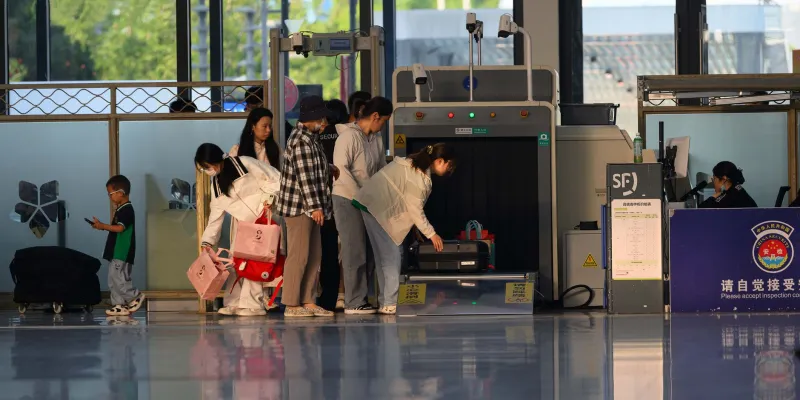
The Transportation Security Administration's primary mandate is identifying threats to aviation safety, not enforcing drug laws. TSA officers are not DEA agents. Their scanners are calibrated to detect explosives, weapons, and prohibited items—not to identify pharmaceutical compounds by chemical composition. A blister pack of generic tadalafil passing through an X-ray belt looks, to a TSA officer, like any other pill packaging.
That said, TSA agents are legally obligated to report any suspected controlled substance they encounter to law enforcement. If your medication is flagged—perhaps because the packaging looks unfamiliar, lacks a label, or is present in an unusually large quantity—local police or federal agents may become involved. The operative word here is suspected. Tadalafil is not a controlled substance under the Controlled Substances Act, which meaningfully limits TSA's authority to act on it unilaterally.
The practical takeaway: traveling with a reasonable, clearly labeled supply of tadalafil through domestic US airports is low-risk from a TSA perspective. The complications arise at international entry points, where a different agency with broader authority takes over.
US Customs and the Personal Use Standard
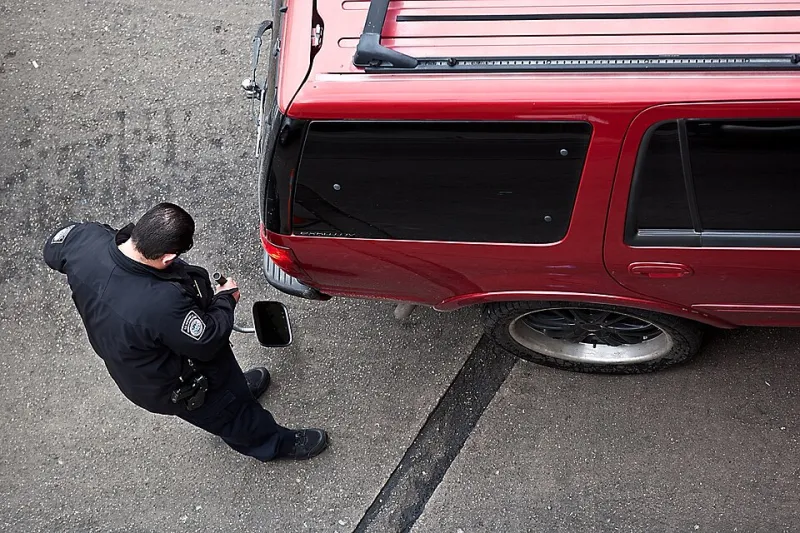
US Customs and Border Protection (CBP) operates under a different legal framework than TSA. When a traveler re-enters the United States carrying medication purchased abroad—including generic tadalafil sourced from a Hong Kong pharmacy—CBP has the authority to examine, detain, and seize that medication under the Federal Food, Drug, and Cosmetic Act.
The FDA's formal policy on imported pharmaceuticals acknowledges a practical reality: it does not have the resources to pursue every traveler carrying a personal supply of medication. Accordingly, the agency applies a general personal use guideline, typically interpreted as a 90-day supply or less for personal consumption. This is not a legal safe harbor enshrined in statute. It is an enforcement discretion policy—meaning CBP officers retain the authority to seize medication even within that quantity if other risk factors are present.
Factors that elevate scrutiny include:
- Unlabeled or repackaged product — Generic medications without manufacturer labeling raise red flags at inspection.
- Multiple different medications in the same shipment — Suggests commercial resale rather than personal use.
- No accompanying prescription documentation — A valid US prescription, or at minimum documentation from a licensed physician, substantially reduces enforcement interest.
- Quantities exceeding a 90-day supply — Above this threshold, the personal use argument weakens considerably.
- Prior seizure history associated with the traveler — CBP maintains records. A previous encounter can trigger heightened scrutiny on future entries.
The Trafficking Threshold: Where Civil Becomes Criminal
The distinction between administrative seizure and criminal prosecution is not arbitrary—it is largely quantity-driven, though intent matters as well. Possession of tadalafil in quantities consistent with personal use rarely results in anything beyond confiscation and a Form FDA-2490 letter, which notifies the recipient that their medication has been seized and explains the basis for that action.
Criminal exposure becomes realistic when quantities suggest commercial distribution, when the traveler cannot provide a credible personal use explanation, or when the medication is accompanied by other indicators of trafficking—cash, customer lists, or distribution materials. Federal prosecutors have pursued cases under 21 U.S.C. § 331, which prohibits the introduction of misbranded or unapproved drugs into interstate commerce, in scenarios involving large-scale importation.
For the average traveler carrying a modest personal supply, criminal prosecution is a remote outcome. The more immediate concern is simply losing the medication and facing the inconvenience of replacement.
The Documentation Difference
The single most effective risk-reduction measure available to travelers carrying tadalafil is documentation. A letter from a licensed US physician confirming the diagnosis, the prescribed medication, and the dosage creates a paper record that reframes the encounter from ambiguous to routine. Pharmacists can also provide documentation of dispensing history for domestically purchased supplies.
For medication sourced internationally—including orders shipped discreetly from Hong Kong—carrying a copy of the original order confirmation, dosage information, and any physician correspondence establishes a chain of legitimacy that customs officers find persuasive. It does not guarantee clearance, but it substantially changes the tone of an inspection.
Practical Guidance Before Your Next Departure
Several straightforward precautions can meaningfully reduce exposure:
- Keep medication in original packaging whenever possible. Manufacturer blister packs with lot numbers and expiration dates communicate legitimacy.
- Carry no more than you need for the trip duration. A two-week vacation does not require a six-month supply.
- Declare when in doubt. Proactive declaration is not an admission of wrongdoing. It is a demonstration of good faith that officers consistently respond to more favorably than concealment discovered during inspection.
- Understand your destination country's laws independently. Many countries outside the US have stricter controls on PDE5 inhibitors. What is legally permissible to carry into the US may be prohibited at the foreign entry point.
- Do not ship medication to a hotel abroad and carry it home. This creates an importation scenario with additional documentation complications.
The airport is not a legal gray zone so much as an enforcement discretion zone. The practical risks for a well-prepared traveler carrying a documented personal supply are manageable. The risks for an underprepared traveler carrying unlabeled, undocumented medication in ambiguous quantities are considerably less so. Preparation, in this context, is the only reliable variable a traveler controls.