Behind the Shipment: How Hong Kong Became a Global Crossroads for Affordable Tadalafil
When an American man orders generic tadalafil from an international online pharmacy, he is participating in a supply chain that spans continents, navigates complex regulatory frameworks, and reflects decades of economic and pharmaceutical history. The city of Hong Kong sits at the center of this network — not by coincidence, but as a consequence of deliberate policy, geographic advantage, and a pharmaceutical culture that has long prioritized accessibility over exclusivity.
Understanding how this ecosystem developed is not merely an academic exercise. For consumers in the United States, where branded Cialis can retail for well over $400 for a monthly supply, the question of where generic alternatives come from — and whether those alternatives are trustworthy — carries real financial and medical weight.
A Port City Built for Trade
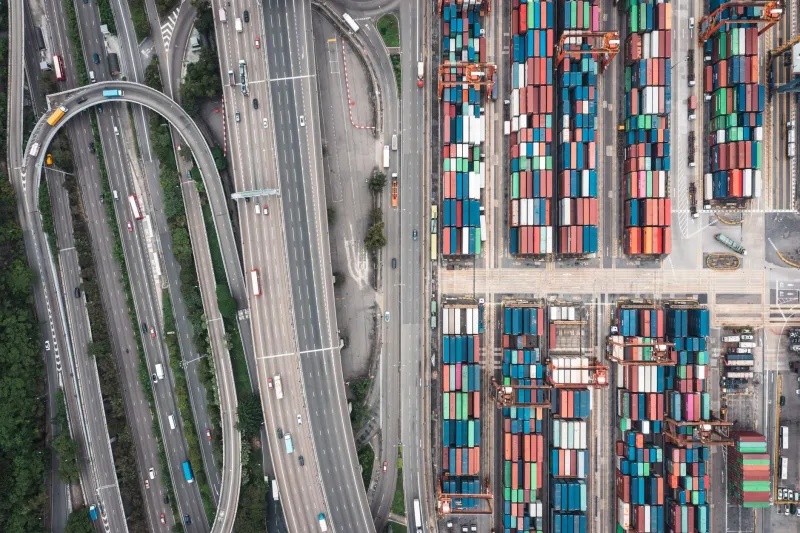
Hong Kong's identity as a commercial crossroads predates its pharmaceutical prominence by more than a century. As a free port with minimal tariff barriers, the city developed one of the most sophisticated logistics infrastructures in the world. Its airport consistently ranks among the busiest cargo hubs globally, and its deep-water port handles an extraordinary volume of international freight. These structural advantages did not disappear when Hong Kong transitioned from a British colony in 1997 — they were preserved and expanded.
For pharmaceutical distributors, this infrastructure is invaluable. Moving temperature-sensitive medications across international borders requires reliable cold-chain logistics, efficient customs processing, and established relationships with international carriers. Hong Kong offers all three in abundance. The city's role as a gateway between mainland Asia and Western markets made it a natural staging point for pharmaceutical exports long before the generic drug industry reached its current scale.
The Regulatory Architecture That Enables Generic Access
Generic pharmaceuticals, including generic tadalafil, exist because patent protections on branded drugs eventually expire. When Eli Lilly's patent on Cialis lapsed in key markets, manufacturers across Asia — particularly in India and China — began producing bioequivalent versions of the molecule. Hong Kong's regulatory environment positioned it to serve as a critical intermediary in distributing these products internationally.
The Hong Kong Department of Health maintains a pharmaceutical registration system that, while distinct from the U.S. Food and Drug Administration's framework, applies rigorous standards to registered products. Importantly, Hong Kong's status as a special administrative region means it operates under a separate legal and commercial system from mainland China — one that has historically been more transparent and internationally recognized.
Many of the generic tadalafil products distributed through Hong Kong are manufactured in facilities that also hold certifications from international bodies, including compliance with Good Manufacturing Practice (GMP) standards. These standards govern everything from ingredient sourcing to quality control testing, providing a level of consistency that reputable distributors can verify and document.
India's Manufacturing Engine and Hong Kong's Distribution Role
To trace the supply chain accurately, one must look upstream to India, which has become the world's largest producer of generic pharmaceuticals by volume. Indian manufacturers supply a significant share of the generic drugs consumed in the United States — including products distributed through FDA-approved channels. Companies such as Sun Pharmaceutical, Cipla, and Aurobindo Pharma are globally recognized names whose products reach American consumers through multiple pathways, both domestic and international.
Generic tadalafil manufactured in India frequently moves through Hong Kong as a distribution hub before reaching end consumers in Western markets. Hong Kong's role in this chain is less about manufacturing and more about logistics, quality verification, and international shipping expertise. Reputable Hong Kong-based pharmacies source from established manufacturers, conduct their own verification processes, and leverage the city's shipping infrastructure to deliver products efficiently and discreetly to destinations including the United States.
This division of labor — Indian manufacturing, Hong Kong distribution — is a defining feature of the international generic pharmaceutical trade and explains much of the cost differential that American consumers encounter when comparing domestic and international prices.
Why American Prices Bear No Relationship to Manufacturing Costs
One of the more instructive aspects of the global tadalafil market is what it reveals about domestic pharmaceutical pricing in the United States. The active pharmaceutical ingredient in tadalafil — the molecule itself — costs a fraction of a cent per milligram to produce at scale. The enormous markups applied by domestic retailers reflect not manufacturing expenses but rather a combination of patent protections, pharmacy benefit manager negotiations, marketing expenditures, and regulatory compliance costs that are specific to the American market.
When those costs are removed from the equation — as they are for international generic distributors operating outside the U.S. system — the price of tadalafil drops dramatically. A 20mg tablet that retails for $30 or more at an American pharmacy may cost $1 to $3 when sourced through a Hong Kong-based supplier. The molecule is identical. The difference is structural, not chemical.
Consistency, Counterfeiting, and How to Distinguish Legitimate Sources
The most common concern American consumers raise about international pharmaceutical sourcing is product consistency. This concern is legitimate and worth addressing directly. The global pharmaceutical market is not uniformly regulated, and counterfeit or substandard medications do exist. The question is not whether risks exist in the abstract, but how to identify suppliers that operate with verifiable standards.
Reputable Hong Kong-based pharmacies distinguish themselves through several observable characteristics. They provide documentation of their sourcing relationships, including manufacturer names and batch information when requested. They ship products in original manufacturer packaging with intact lot numbers and expiration dates. They maintain consistent communication channels and do not request payment exclusively through untraceable methods. They also tend to operate established websites with verifiable contact information rather than appearing and disappearing across rotating domains.
Consumers who apply basic due diligence — researching a supplier's history, reviewing independent user accounts, and confirming that products arrive in properly labeled packaging — are in a substantially better position to assess product legitimacy than those who prioritize price alone.
The Economics of International Access
For American men managing erectile dysfunction, the practical calculus is straightforward. Domestic branded Cialis or even domestically sourced generic tadalafil remains financially inaccessible for a significant portion of the population, particularly those without comprehensive insurance coverage — which, for ED medications, describes the overwhelming majority of American men. International sourcing through established Hong Kong distributors represents a meaningful alternative, one grounded in real pharmaceutical manufacturing infrastructure rather than regulatory arbitrage alone.
Hong Kong's position in this ecosystem is the product of history, geography, and institutional design. It is a city that has spent generations facilitating the movement of goods between East and West, and the pharmaceutical trade is one expression of that broader function. For American consumers navigating the gap between medical need and domestic affordability, that function carries genuine practical value.
Understanding the supply chain does not resolve every question about international pharmaceutical purchasing, but it does replace vague anxiety with informed judgment — which is, ultimately, the foundation of any sound health decision.